Ambassador of Belarus U.Baravikou gives an interview to ‘People’s Army’ newspaper
26.04.2026Ahead of the 40th anniversary of the day the Chernobyl nuclear power plant accident was brought under control on April 25, 2026, Ambassador Extraordinary and Plenipotentiary of the Republic of Belarus to the Socialist Republic of Vietnam Uladzimir Baravikou gave an interview to the newspaper ‘People’s Army’:
Reporter: Forty years ago, on April 26, 1986, the Chernobyl nuclear power plant suffered the worst accident in the history of nuclear energy. What were the consequences of the incident for Belarus? What steps did the state take to address them and mitigate the negative impact of radiation on people’s lives?
Ambassador Uladzimir Baravikou: Forty years later, the word ‘Chernobyl’ remains, for every Belarusian, an event that changed the lives of hundreds of thousands of people, and a symbol of the courage and heroism shown by those who dealt with the accident.
Belarus suffered more than any other country. Almost a quarter of the republic’s territory, home to a fifth of the population, was contaminated with radionuclides. 479 settlements were wiped off the map. The total damage is estimated at 32 times the republic’s 1985 budget.
A long way has been covered, from the clean-up, rehabilitation and revival of the affected areas to the transition to their sustainable socio-economic development.
National policy is primarily aimed at reducing the health risks posed by radiation and ensuring public safety. To this end, measures have been taken including resettlement, land decontamination, the disposal of radioactive waste, and restrictions on access to contaminated areas. A comprehensive set of measures has been adopted to minimise radiation exposure.
A total of 138,000 people were resettled, whilst 200,000 left of their own accord. All of them were provided with housing, compensation payments, benefits and concessions.
In 1988, the Polesie State Radiation and Ecological Reserve was established in the evacuated areas, playing a vital role in the conservation of biodiversity.
As the President of the Republic of Belarus Aleksandr Lukashenko noted, ‘we… focused our attention on the projects that people needed: housing, clean water, sewerage, drainage, gas supply and so on. A great deal has been achieved during this time. And this period has shown that we acted absolutely correctly and appropriately’.
Reporter: What have been the results of the government’s efforts to address the consequences of the accident and ensure that people can lead normal lives?
Ambassador Uladzimir Baravikou: The main tools have been state programs to address the consequences of the Chernobyl accident and promote the socio-economic development of the affected regions, aimed at creating living conditions, reducing the impact of radioactive contamination and providing social protection for the population. A total of six such programs have been implemented.
In 2026, a new comprehensive State Program, ‘Public Safety Infrastructure’, was launched for the period 2026–2030, with the aim of integrating the management of the post-Chernobyl situation into a unified system for ensuring nuclear and radiation safety in Belarus. ‘Chernobyl’-related measures have been incorporated into the state programs of the new cycle: ‘Society of Equal Opportunities’, ‘Intelligent Belarus’, ‘Health of the Nation’, ‘Agricultural Sector of the Future’, ‘Sustainable Energy and Energy Efficiency’, ‘Housing Construction’, ‘Comfortable Housing and a Favourable Environment’ for 2026–2030.
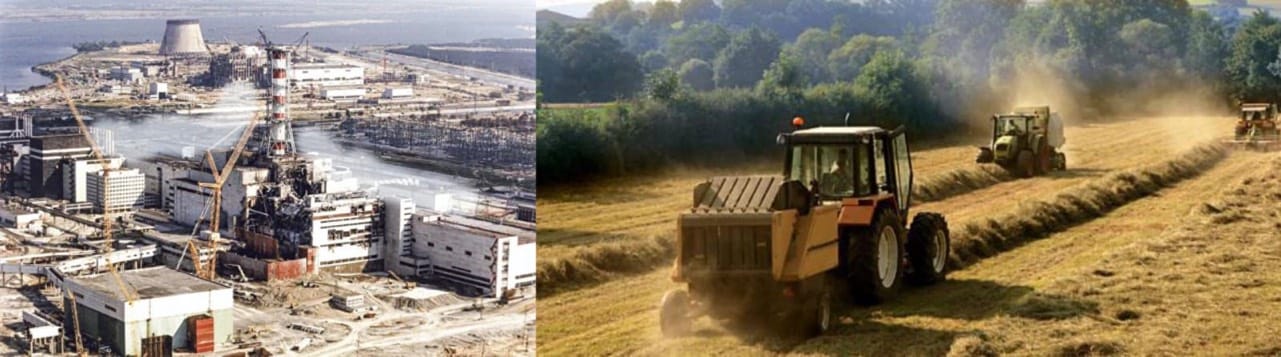
As the radiation situation evolves, and thanks to measures implemented by the state, the socio-economic and radiation-ecological rehabilitation of contaminated areas is underway. A total of 1,657 settlements − or 45% of the total number located within the area of radioactive contamination − have returned to normal living conditions. The area of the republic contaminated with caesium-137, as a result of its radioactive decay, has decreased by a factor of 1.8, whilst the area contaminated with strontium-90 has decreased by almost a factor of 1.9.
The work is being done to return land to agricultural use. The area of contaminated agricultural land has been reduced from 1,866,000 hectares to 804,400 hectares. Since 1993, 20,500 hectares of land have been returned to agricultural use, subject to strict radiological quality control. Agrochemical and agrotechnical protective measures based on scientific research are carried out on an ongoing basis to ensure the production of clean, high-quality produce.
Belarus has adopted stricter permissible levels for radionuclides in foodstuffs than those of the Eurasian Economic Union. These requirements not only serve to protect against radiation but also act as a guarantee of food quality. Radiation monitoring is carried out by over 500 laboratories and monitoring stations, which check the condition of soil, crop and livestock products, as well as products sold in markets. Raw materials and finished products undergo a three-stage control process: incoming inspection of raw materials, monitoring during processing, and inspection of finished products. The reliability of the system is confirmed by the fact that, throughout its entire period of operation, not a single instance of agricultural produce entering the retail network in breach of the requirements has been recorded.
Particular attention is paid to forests. The set of protective measures includes radiation monitoring and surveillance, forest fire prevention, reforestation and afforestation, ensuring the radiation safety of workers, quality control systems for radioactive contamination, and providing information on the radiation situation in forests. There has been a reduction in the area of forest ecosystems contaminated with caesium-137 (by an average of 2% per year).
The objects of radiation monitoring are atmospheric air, surface and groundwater, fallow land, agricultural land and forest land.
Reporter: What measures is the state taking to provide social protection for the affected population and to safeguard people’s health?
Ambassador Uladzimir Baravikou: More than half of the funds allocated annually to mitigate the consequences of the Chernobyl accident are directed towards social protection for the population in the affected areas.
The state’s efforts have resulted in the restoration and development of the affected regions. They have been connected to the gas network, a well-developed social infrastructure is in place, good roads have been built, and the streets of villages and towns have been improved. In each of the affected areas, housing is being built for young professionals, large families, people with disabilities and other categories of citizens in need of improved housing conditions. Water mains are being laid and repaired, iron removal stations are being built, and artesian wells are being drilled. Unique experience has been gained in combining the efforts of government bodies with the expertise of scientific organisations.
Efforts aimed at the recovery and sustainable socio-economic development of the affected regions will continue. Priority measures include the creation of new jobs and favourable conditions for business, including tax incentives, lending and other support. All this is being done so that people can lead normal lives: growing crops, building homes and raising children.
People’s health is a top priority. Healthcare institutions carry out special medical check-ups every year. A system of medical care has been established at district, city and regional levels. A system is in place to register citizens affected by the Chernobyl disaster and other radiation accidents.
The Republican Scientific and Practical Centre for Radiation Medicine and Human Ecology, established with the support of the Head of State in Gomel in 2002, plays a significant role in safeguarding public health. The Centre is equipped with state-of-the-art facilities and meets international standards for the provision of medical care.
In each of the affected districts, where necessary, the reconstruction or construction of new district hospitals, rural clinics and paramedic and midwifery stations is being carried out.
Free sanatorium and resort treatment and health improvement programs for the affected population play a vital role in disease prevention. Priority is given to children. Twelve children’s rehabilitation and health improvement centres have been established, which welcome children in organised groups all year round. Every year, thousands of free vouchers are allocated for health improvement and sanatorium-resort treatment for children living in contaminated areas. People with disabilities in Groups I and II are entitled to priority annual treatment.
Reporter: Despite the ‘Chernobyl experience’, a nuclear power plant has been built and put into operation in Belarus. Isn’t there a contradiction here?
Ambassador Uladzimir Baravikou: The uniqueness of the ‘Chernobyl experience’ lies in the fact that, despite the scale of the accident and its consequences, and the colossal sums spent, Belarus has not abandoned peaceful nuclear energy as a source of clean energy. The project to build its own nuclear power plant, which was launched back in Soviet times but then suspended following the Chernobyl accident, was realised five years ago when the first Belarusian nuclear power plant was commissioned, utilising the most modern technologies, including multi-level safety systems.
The Belarusian nuclear power plant produces about 40% of the country’s total electricity, which has made it possible to completely stop importing electricity and reduce greenhouse gas emissions. Most importantly, Belarus has secured a reliable source of environmentally friendly and affordable energy for decades to come, whilst making it accessible to the population.
The launch of Belarus' first nuclear power station marked the beginning of a new phase in the country's development. As the President of Belarus Aleksandr Lukashenko noted on November 14, 2025, ‘the construction of the nuclear power station has not only strengthened our energy security, but has also set the course for Belarus' further development as a high-tech nation’.
Reporter: Thank you very much!
Link to the article: https://ru.qdnd.vn/chernobilj-40-let-vosstanovleniya-belarusi-posle-katastrofi-post42758.html?gidzl=18825e-0VcGEbG4MWPb-QmgM1X-SoojhGfO17SFBUpaTn5TFbPaeEHoN0qsSptGuGP427ZIuEqv5ZuXyOm